

Think about what your car goes through every single day — sitting outside in 45°C Indore summers, getting bleached by UV rays, soaked in the monsoon, covered in dust and bird droppings. Your car’s paint fades. The dashboard cracks. The interior starts smelling musty.
A car parking shed fixes all of that. It’s not a garage — you don’t need to build walls or a gate. It’s simply a roofed structure above your parking space, and it’s one of the most cost-effective home upgrades you can make. A decent shed costs ₹35,000–₹80,000 and protects a vehicle worth ₹5 lakh to ₹30 lakh.
In this guide, I’ll walk you through every type of car parking shed design for home, what each one costs in India, which material to pick for your climate, what to check before you build, and the mistakes that cost homeowners money. No fluff — just everything you actually need to decide and get it done.
What Exactly Is a Car Parking Shed — and How Is It Different from a Garage?
A lot of homeowners use the words parking shed, carport, and garage interchangeably. They’re three different things, and mixing them up leads to the wrong quotes and wrong expectations.
| Type | Walls? | Door? | Typical Cost | Best For |
| Parking shed | No walls | No | ₹20,000–₹90,000 | Most Indian homes |
| Carport | 1–2 side panels | No | ₹40,000–₹1,20,000 | Side-entry driveways |
| Garage | Full walls + roof | Yes (shutter) | ₹2,50,000+ | Maximum security |
For most Indian homeowners — especially those with limited space in front of the house — a parking shed is the sweet spot. It keeps your car protected without the complexity or cost of building a full garage.
Five real benefits you’ll notice within the first month:
- Paint protection: UV rays are the #1 cause of car paint fading in India. A shed reduces direct exposure by up to 95%.
- Interior temperature: A shaded car can be 15–20°C cooler inside on a summer afternoon. No more burning your hands on the steering wheel.
- Rain and bird droppings: Acid in bird droppings eats through car paint in weeks. A shed keeps this off completely.
- Resale value: A home with a proper parking structure consistently fetches a better price, especially in urban areas.
- EV charging ready: If you’re planning to switch to an electric vehicle, the shed becomes your charging station with a simple conduit addition.
Types of Car Parking Shed Designs for Home — Full Comparison
There are six main types you’ll encounter. Each suits a different budget, plot size, and home style. Here’s an honest breakdown of all of them.
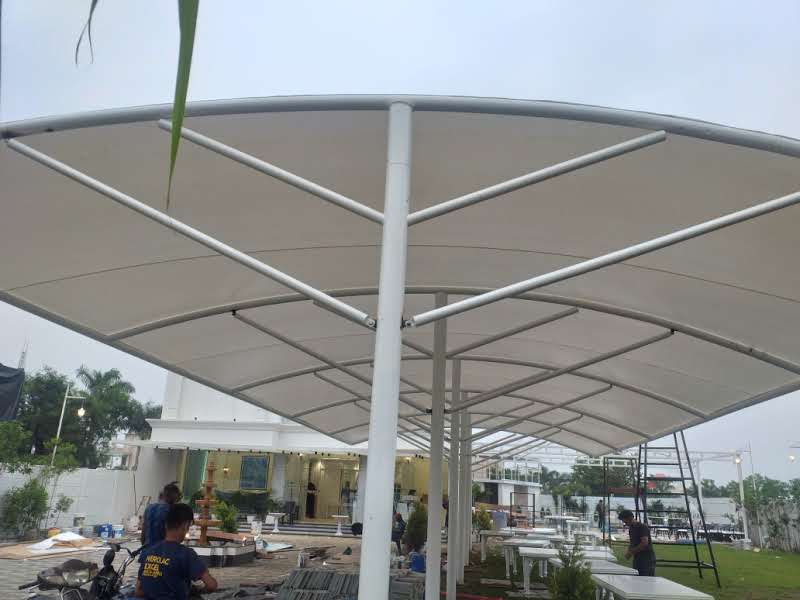
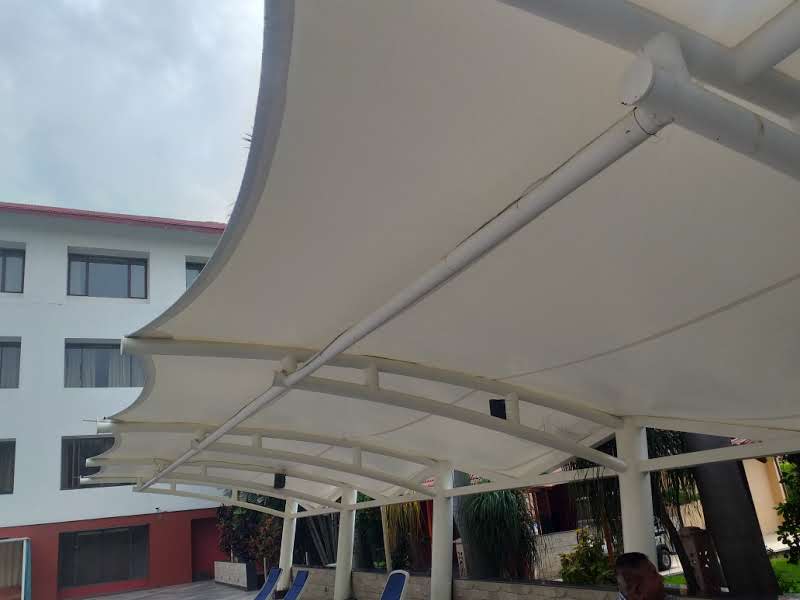
1. Tensile Fabric Shed — Most Popular, Most Affordable
A single-car tensile shed in most Indian cities costs between ₹20,000 and ₹45,000 fully installed. The fabric typically lasts 7–10 years before it needs replacing (the frame lasts much longer).
2. Polycarbonate Sheet Shed — Best All-Rounder for Indian Weather
Polycarbonate panels are the same material used in riot shields and aircraft windows — extremely tough, lightweight, and translucent. A polycarbonate roof lets in soft diffused light while blocking 99% of UV rays. For hot cities like Nagpur, Indore, or Hyderabad, this is the best choice.
3. MS Steel / Metal Sheet Shed — Strongest, Most Durable
A mild steel frame with a corrugated metal or colour-coated GI sheet roof. This is what most under-construction home builders go with when they want something that will genuinely last 20+ years without much thought.
4. Cantilever Shed — Perfect for Narrow Driveways
A cantilever design has pillars only on one side — usually the wall side — with the roof cantilevering out over the parking space. There’s no pillar in the middle of your driveway, so you can open the car door fully without hitting a column.
5. Wall-Mounted Canopy Shed — Cheapest Option
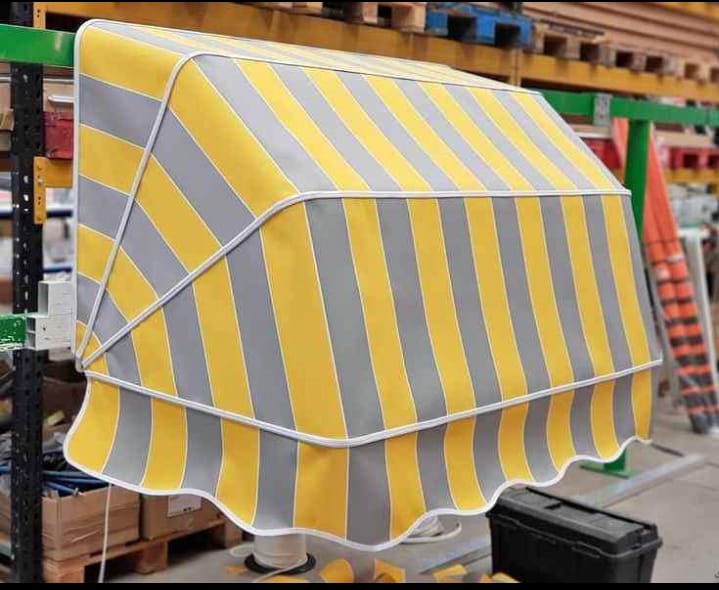
If your car parks right up against the house wall, a wall-mounted canopy is the simplest and cheapest shed you can install. It’s essentially a bracket-mounted awning — polycarbonate or tensile — that extends 8–12 feet from the wall.
6. Solar Panel Roof Shed — The 2026 Trend
This is the one everyone’s starting to talk about. A solar panel roof shed does two jobs: it shades your car AND generates electricity. A typical 10×18 ft solar shed with 4–6 solar panels generates 2–3 kWh per day — enough to run your home’s fans, lights, and charge an EV.
Modern Car Parking Shed Design for the Front of Your House
The front of your house is the first thing people see. A badly designed parking shed — mismatched colour, wrong proportions, clunky steel columns — can ruin an otherwise good-looking home exterior. A well-designed one makes the whole property look more polished.
Design ideas that work well for Indian home fronts:
- Flat-roof minimalist tensile
- Sloped polycarbonate with decorative iron columns
- Pergola-style tensile
- Double-car flat canopy
Low Cost Simple Car Parking Shed Design — Real Budget Breakdown
Here’s something most shed articles won’t tell you — that ₹350 per sq ft number you see everywhere is the material cost only. By the time you add labour, foundation bolts, cutting, fabrication, and transport, the real number is higher. Let me give you an honest example.
| Real example — Single car shed, Indore, 2025: Size: 10 ft × 18 ft = 180 sq ft Material: MS steel frame + 6mm twin-wall polycarbonate roof Steel frame fabrication: ₹18,000 Polycarbonate panels (6mm, UV-coated): ₹14,000 Anchor bolts + concrete base: ₹4,500 Labour & installation: ₹8,000 Drainage pipe + slope adjustment: ₹2,500 Total: ₹47,000 all-in (approx. ₹261/sq ft on real cost) |
| Budget | Cost Range | What You Get |
| Budget (under ₹40,000) | ₹15,000–₹39,000 | Wall-mounted canopy or basic tensile, 1 car, HDPE fabric, thin MS pipe frame |
| Mid-range (₹40,000–₹80,000) | ₹40,000–₹79,000 | Polycarbonate or PVC tensile, 1–2 cars, proper MS square tube frame, anti-rust treatment |
| Premium (₹80,000+) | ₹80,000–₹2,50,000 | PTFE tensile or solar panel roof, designer columns, powder coating, 2+ cars, 15+ year lifespan |
Three ways to reduce cost without compromising quality:
- Single pillar cantilever instead of 4 columns: Saves on material and looks cleaner. Works when one side has a wall.
- HDPE shade cloth instead of polycarbonate: Cuts cost by 30–40% and still provides good shade — just not rain protection.
Local fabricator vs. branded company: A local MS steel fabricator can build the same structure as a branded company for 20–35% less. Ask for 3 quotes and check their previous work photos
Materials Compared — Which One Is Right for Your Home and City?
| Material | Cost (per sq ft) | Lifespan | Heat resist. | Rain proof? | Maintenance |
| Polycarbonate (twin-wall) | ₹180–₹250 | 10–15 yrs | Excellent | Yes | Low — wipe clean |
| Tensile PVC fabric | ₹120–₹200 | 7–10 yrs | Good | Yes | Low — fabric replacement |
| PTFE tensile fabric | ₹350–₹600 | 20–25 yrs | Excellent | Yes | Very low |
| MS steel + GI sheet | ₹150–₹220 | 20+ yrs | Poor (heats up) | Yes | Medium — repaint/rust treat |
| HDPE shade cloth | ₹60–₹120 | 5–7 yrs | Good | No (porous) | Low |
| WPC/Wood finish | ₹400–₹700 | 10–15 yrs | Moderate | With treatment | High |
Quick recommendation by climate:
- Indore, Nagpur, Jaipur (hot + dry): Go with UV-400 rated twin-wall polycarbonate. Heat is the enemy here, not rain.
- Mumbai, Kochi, Guwahati (heavy rain): MS steel frame with a steeply sloped GI or polycarbonate roof. Slope matters — minimum 5° pitch so water drains fast.
- Bangalore, Pune, Delhi (moderate): Tensile PVC is popular and well-priced. Good balance of aesthetics and function.
- Chennai, Vizag, Goa (coastal): Salt air corrodes regular steel fast. Use galvanised steel or powder-coated aluminium frames only. Don’t cheap out on this.
Before You Build — 7-Point Checklist Every Indian Homeowner Should Follow
This is the section most people skip — and then regret. Taking 30 minutes to check these seven things can save you ₹10,000–₹50,000 in mistakes, rework, and legal trouble.
- Measure your plot carefully.
- Check municipality rules.
- Plan drainage before you finalise the slope.
- Confirm height clearance.
- Check your soil type before anchor bolt sizing.
- Check for overhead cables or tree branches.
- Decide on housing society rules.
5 Mistakes That Cost Indian Homeowners Money — Avoid These
These aren’t hypothetical. These are things that regularly happen, and they either cost money to fix or mean the shed doesn’t last.
Mistake 1: Buying Cheap Polycarbonate
Mistake 2: No Drainage Slope
Mistake 3: Ignoring Anti-Rust Treatment on Steel
Mistake 4: Wrong Column Placement
Mistake 5: Getting Only One Quote
Trending in 2026 — Solar Roof Sheds and EV Charging Integration
If you’re planning your home’s parking today, it’s worth thinking about what your parking needs will look like in 5–10 years. Two trends are already changing how homeowners approach this.
Solar panel roof sheds are exactly what they sound like — instead of (or in addition to) a regular roof, you install solar panels on the shed’s roof frame. A 10×18 ft shed can fit 4–6 panels of 400W each, generating 1,600–2,400W peak power, or roughly 6–10 units per day depending on your location and sunlight hours.
The economics work like this: a solar panel upgrade over a standard shed costs ₹70,000–₹1,30,000 extra. At ₹8–₹10 per unit (typical Madhya Pradesh electricity rate), you save ₹1,700–₹3,000 per month on your electricity bill. Full ROI in 4–6 years — and the panels last 25 years.
EV charging integration is the other trend. Adding a conduit (hollow pipe) inside the shed’s main pillar during installation costs almost nothing — maybe ₹1,500–₹2,500 extra. This conduit carries the charging cable cleanly from your home’s main board to a wall socket near the car. No messy wires, no drilling later, no afterthought cable routing.
If you’re buying a two-wheeler EV or planning to upgrade to a car EV in the next 3 years, ask your fabricator to include this in the design now. It’s a small addition during construction and a major headache to add later.
How to Find a Good Car Parking Shed Installer Near You
Finding a reliable fabricator is half the battle. Here’s how to do it without wasting time or money.
Where to look:
- Google Maps: Search ‘car parking shed fabricator near [your city]’ and look for businesses with 10+ reviews and actual installation photos in their listing.
- IndiaMART: Good for comparing multiple vendors and getting quotes online. Filter by location.
- Local recommendation: Ask your neighbours, colony WhatsApp group, or someone who already has a good-looking shed. This is still the most reliable method in smaller cities.
Questions to ask before booking:
- What brand/grade of polycarbonate or fabric do you use?
- What anti-rust treatment do you apply on the steel frame?
- Do you offer a warranty on the frame and the roofing material separately?
- Can you share photos or addresses of recent home installations (not commercial)?
- Do you do a site measurement visit before giving the final quote?
Red flags — walk away if you see these:
- Vendor gives a price over the phone without visiting the site
- No photos of previous home installations, only renders or stock images
- No written quotation — only verbal estimates
- Pushes you to pay 100% upfront before any work begins
How much does a car parking shed cost for a home in India?
Expect to pay ₹20,000–₹45,000 for a basic tensile single-car shed, ₹38,000–₹65,000 for a polycarbonate single-car shed, and ₹70,000–₹1,20,000 for a premium 2-car or solar shed. These are all-in prices including installation.
Which material is best for a car parking shed in India?
For hot cities: UV-rated twin-wall polycarbonate. For heavy rain areas: MS steel with a sloped GI or polycarbonate roof. For budget with aesthetics: PVC tensile fabric. For coastal areas: galvanised steel frame, no raw MS steel.
Do I need permission to build a car parking shed at home?
It depends on your city and structure type. Tensile sheds are generally classified as temporary structures in most Indian municipalities and don’t require a permit. Permanent MS steel or concrete sheds may require a simple approval from your local municipal corporation. If you’re in a gated society, check with your RWA first.
What is the standard size of a car parking shed for one car?
9 ft × 18 ft for a standard hatchback or sedan. 10 ft × 20 ft for an SUV, MUV, or larger vehicle. Add 1 ft of overhang on each open side for better rain protection.
How long does a car parking shed last?
HDPE shade cloth: 5–7 years. PVC tensile fabric: 7–10 years. Polycarbonate panels: 10–15 years. MS steel frame (with proper treatment): 20+ years. PTFE tensile fabric: 20–25 years.
Can I add a car parking shed to a rented home?
Only with written permission from your landlord. Most tensile sheds can be installed and removed without permanent damage to the property — but get this in writing before you spend money.
Is a tensile car parking shed strong enough for heavy rain and wind?
A properly installed tensile shed with a quality PVC fabric (minimum 650 GSM) and a well-anchored steel frame handles normal monsoon rain and moderate wind without any issue. For very high wind zones (coastal areas or hilltops), go with MS steel + GI sheet for more resistance.
Pingback: PVC Tensile Structure in Bhopal | Farari Enterprises - farari enterprises