
Walk past any street in Indore or Bhopal after a good monsoon rain and you’ll notice something: the houses that stayed dry near their windows almost always have some kind of shed or canopy jutting out above them. It’s not decoration first — it’s function first. The look comes after.
A window shed does three jobs at once. It keeps rain from splashing in through an open window, it cuts down the direct heat hitting your wall and glass in peak summer, and — if it’s designed well — it gives a flat wall some visual depth instead of looking like a slab of concrete with holes cut into it.
This guide walks through the different types of window shed designs, what actually drives the price up or down, and how the priorities shift depending on whether you’re a homeowner, a hotel owner, or running a commercial property. If you’ve already read our piece on car parking sheds, think of this as the smaller, more detail-oriented cousin — same steel fabrication logic, much smaller footprint.
What Is a Window Shed and Why Homes, Hotels & Businesses Are Adding Them
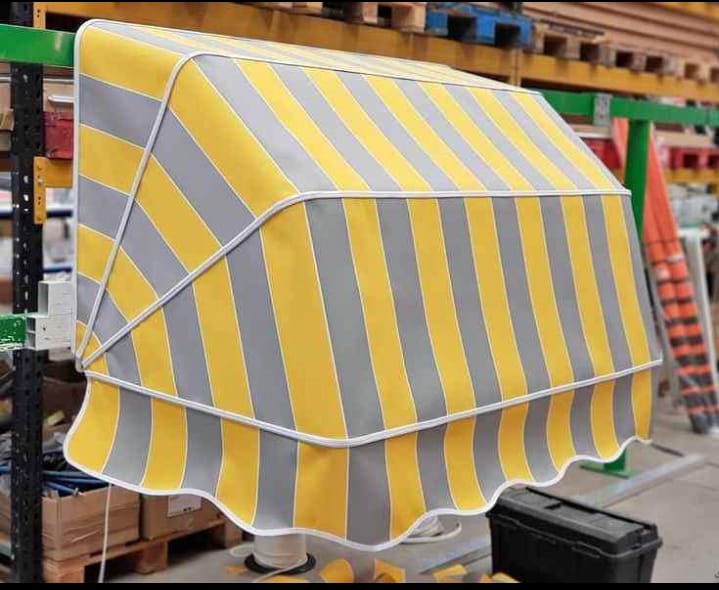
A window shed is a projected structure — usually steel-framed — installed above or around a window to provide shade, deflect rain, and break up the flatness of an exterior wall. Think of it as a mini roof for a single window, or in commercial builds, a repeated design element that runs across several windows on the same façade.
The functional case is straightforward:
- Heat reduction. A window with direct afternoon sun exposure can raise indoor temperature noticeably, especially in west-facing rooms. A shed with even a slight overhang blocks a good portion of that direct sun.
- Rain protection. In Madhya Pradesh’s monsoon months, an open or partially open window without any overhead protection means water on the sill, the wall below it, and sometimes the floor inside.
- Ventilation on rainy days. Because it’s covering the window, not sealing it, you can keep the window cracked open even during light rain without water coming in — something a plain wall or sunshade paint job can’t do.
The aesthetic case matters too, but it’s secondary. A well-proportioned steel shed adds a shadow line and a bit of architectural rhythm to a wall that would otherwise be dead flat. That’s a big part of why hotels use them across entire façades — it’s cheap visual interest at scale.
One distinction worth making early: a window shed is not the same thing as a full car parking shed or an industrial roof structure. Those cover an entire area — a car, a workspace, a storage yard. A window shed covers one opening, or a repeated series of openings. Different scale, different structural math, but the same fabrication skill set.
Types of Window Shed Designs(Choose by Use Case)
There isn’t one “right” window shed design — the right one depends on what the window is for and who’s paying the fabrication bill. Here’s how the main types break down.
Simple window shed design for home. This is a flat or gently angled steel canopy, minimal detailing, no ornamentation. It’s the design most homeowners land on when the budget is tight or the goal is purely functional — keep the rain out, cut some heat, done. It’s also the fastest to fabricate and install, since there’s no custom angling or multi-piece framing involved.
Modern window shed design. This is where steel gets more interesting. Angular or asymmetric frames, powder-coated finishes in colors that match or contrast the house, sometimes exposed bolt detailing left visible on purpose instead of hidden. This is the design homeowners pick when the shed is meant to be seen — a design statement on the front-facing side of the house, not just a utility fix on the back.
Kitchen window shed. Kitchen windows have a slightly different job than a bedroom or living room window — they’re dealing with steam, cooking smoke, and usually more frequent opening and closing. A kitchen window shed is typically smaller in footprint but needs to account for that ventilation pattern; you don’t want a design so enclosed that it traps smoke against the wall instead of letting it dissipate.
Commercial or hotel-grade window shed. This is a different scale problem entirely. Instead of designing one shed for one window, you’re designing a module that gets repeated 10, 30, sometimes 100 times across a building face. It needs reinforced framing (wind load adds up differently across a long façade), a weather-rated coating that can handle years of exposure without touch-ups, and — critically — dimensional consistency, because one crooked-looking shed among fifty is very noticeable.
Window Shed Design Ideas for Homeowners
If you’re a homeowner trying to picture what this actually looks like on your house, here are a few concrete directions:
The cantilevered flat canopy. A single flat steel sheet, angled slightly downward from the wall, supported by two or three bracket arms with no visible vertical posts touching the ground. Clean, modern, minimal shadow clutter. Works well on homes with a contemporary exterior.
The sloped tin-look canopy. Slightly corrugated or ribbed steel sheeting, angled more steeply than a flat canopy, giving it a traditional sloped-roof look in miniature. This tends to suit homes with a more classic or regional architectural style, and the steeper angle sheds rainwater faster — useful if your window faces the direction MP’s monsoon winds usually blow in from.
The box-frame with slat detailing. Instead of a single solid panel, this uses a steel frame with horizontal slats — partial shade, partial airflow, more of a design feature than a full weather barrier. Best suited to windows that don’t get direct heavy rain exposure but could use some sun-glare reduction.
On materials: powder-coated steel costs more upfront than a basic painted finish, but it holds color and resists corrosion far longer — which matters more in this region than people expect. A basic paint job on raw or galvanized steel can start showing rust streaks within one or two monsoon seasons if the drainage design isn’t right. Powder coating isn’t just a color choice, it’s a maintenance-cost decision you’re making up front. Worth knowing before you pick the cheaper quote.
On upkeep generally: steel window sheds need far less maintenance than wood or fabric canopies — no repainting every year, no fabric replacement after UV degradation — but “low maintenance” isn’t “zero maintenance.” An annual check for loose bolts and drainage blockage (leaves, debris sitting on top of the shed) keeps it performing the way it’s supposed to.
Window Shed Solutions for Hotels & Commercial Properties
The priorities flip when you move from a single home to a hotel or commercial building. A homeowner is optimizing for how one shed looks on one wall. A hotel or business is optimizing for consistency across dozens of windows and durability under constant weather exposure with minimal maintenance visits.
A few things that matter more at commercial scale:
- Brand and color matching. If the building has a signature color scheme, the shed’s powder-coated finish needs to match it precisely and consistently across every unit — a slight color variance between window 3 and window 30 stands out badly in photos, and hotels live and die by how they photograph.
- Standardized fabrication. Once a design is approved, it needs to be repeatable at the same dimensions and quality across the full order. This is where fabrication discipline matters more than creative design — the tenth shed needs to be identical to the first.
- Higher wind and weather load tolerance. Taller buildings and longer unbroken façades experience different wind dynamics than a single-story home. The structural bracket design needs to account for that, not just be scaled up from a residential version.
If your business or property is considering window sheds across a full building face, this is generally not a get-a-quote-and-go decision — it usually needs a site visit to assess wall material, height, and wind exposure before finalizing a design that can be safely repeated at scale.
Window Shed Design for Home Price: What Affects the Cost
This is usually the question everyone actually wants answered, so let’s be direct about what moves the number rather than throwing out a single figure that won’t match your situation.
Window span. A shed over a small bathroom window costs less in material than one spanning a wide living room window — more steel, more coverage, more cost.
Steel gauge/thickness. Thicker steel costs more but lasts longer and handles wind load better. Thinner gauge steel is cheaper up front but flexes more over time and is more prone to denting.
Finish type. Basic paint is the cheapest option. Powder coating costs more but resists rust and fading significantly longer — usually the better long-term value in a region with heavy monsoon exposure.
Number of windows. A single shed is priced differently than a matching set across multiple windows — there’s often some efficiency gain in fabricating several units at once, since setup and design work is shared across the batch.
Site accessibility. A ground-floor window with easy access costs less to install than a third-floor window needing scaffolding or lift equipment.
As a rough point of reference: a single small window shed is a meaningfully smaller job than a full car parking shed, since the material volume is a fraction of what a parking structure needs. But the exact number depends entirely on the factors above, which is why we’d rather walk you through a real quote based on your window size and finish preference than throw out a number that might not apply to your situation. You can send us your window dimensions directly on WhatsApp and get a straightforward quote back — no showroom visit required to get started.
Why Choose Farari Enterprises for Custom Window Shed Fabrication
Farari Enterprises works out of Indore, with installation coverage across Indore, Bhopal, and the broader Madhya Pradesh region. Steel fabrication is the core of what we do — car parking sheds, industrial structures, shop and fold builds, and custom welding work — and a window shed draws on the exact same fabrication discipline, just at a smaller scale.
If you’re comparing quotes, the thing worth asking any fabricator — including us — is what steel gauge they’re quoting and whether the finish is powder-coated or basic paint. Those two answers tell you more about long-term value than the price alone does.
Our process is straightforward: you reach out with your window dimensions and design preference, we walk through the design and finish options that fit your budget and the direction your window faces, and once confirmed, we fabricate and install. For homeowners this is usually a fast turnaround; for hotel or commercial orders with multiple units, we plan a site visit first to make sure the design holds up consistently across the full run.
Frequently Asked Questions
What is the average price of a window shed for a home? It depends mainly on window size, steel gauge, and finish (basic paint vs. powder coating). A single small window shed is a much smaller job than a full parking shed, but the exact cost varies enough that a quick WhatsApp message with your window dimensions gets you a far more accurate number than any general estimate.
What material is best for a window shed — steel, wood, or fabric? Steel holds up best against Madhya Pradesh’s monsoon and summer heat cycle. Wood needs regular treatment to avoid rot and pest damage, and fabric canopies degrade faster under continuous UV exposure. Steel costs more upfront but needs far less replacement over time.
Can a window shed be customized for kitchen windows specifically? Yes — kitchen window sheds are usually sized and angled a bit differently to account for steam and cooking smoke ventilation, so the window can still be opened for airflow without the shed trapping smoke against the wall.
How long does a steel window shed installation take? A single residential window shed is typically a fast installation once the design is finalized, since the fabrication happens off-site and installation itself is quick. Commercial jobs with multiple units take longer due to the scale and any scaffolding or access requirements.
Do window sheds need regular maintenance? Steel window sheds need far less maintenance than wood or fabric alternatives, but they’re not maintenance-free. An annual check for loose bolts, drainage blockage, and any early rust spots (especially on non-powder-coated finishes) keeps them performing well for years.
Looking for other steel fabrication solutions? Check out our guide on car parking shed installation for vehicle coverage, or read about our commercial and industrial shed projects if you’re planning something at a larger scale. For rain-and-heat coverage that doesn’t need full steel framing, our PVC tensile structure guide covers the fabric-based alternative.